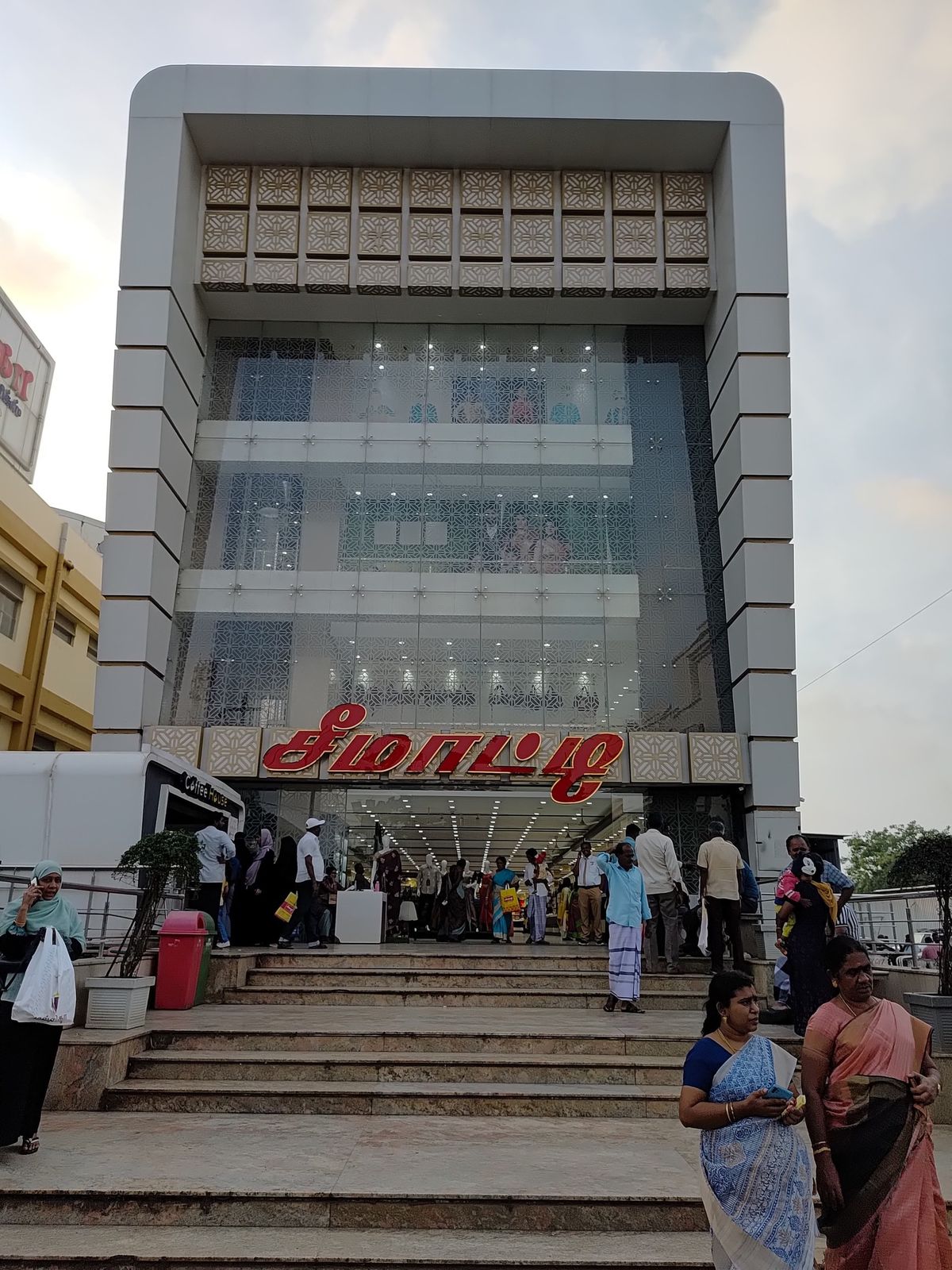

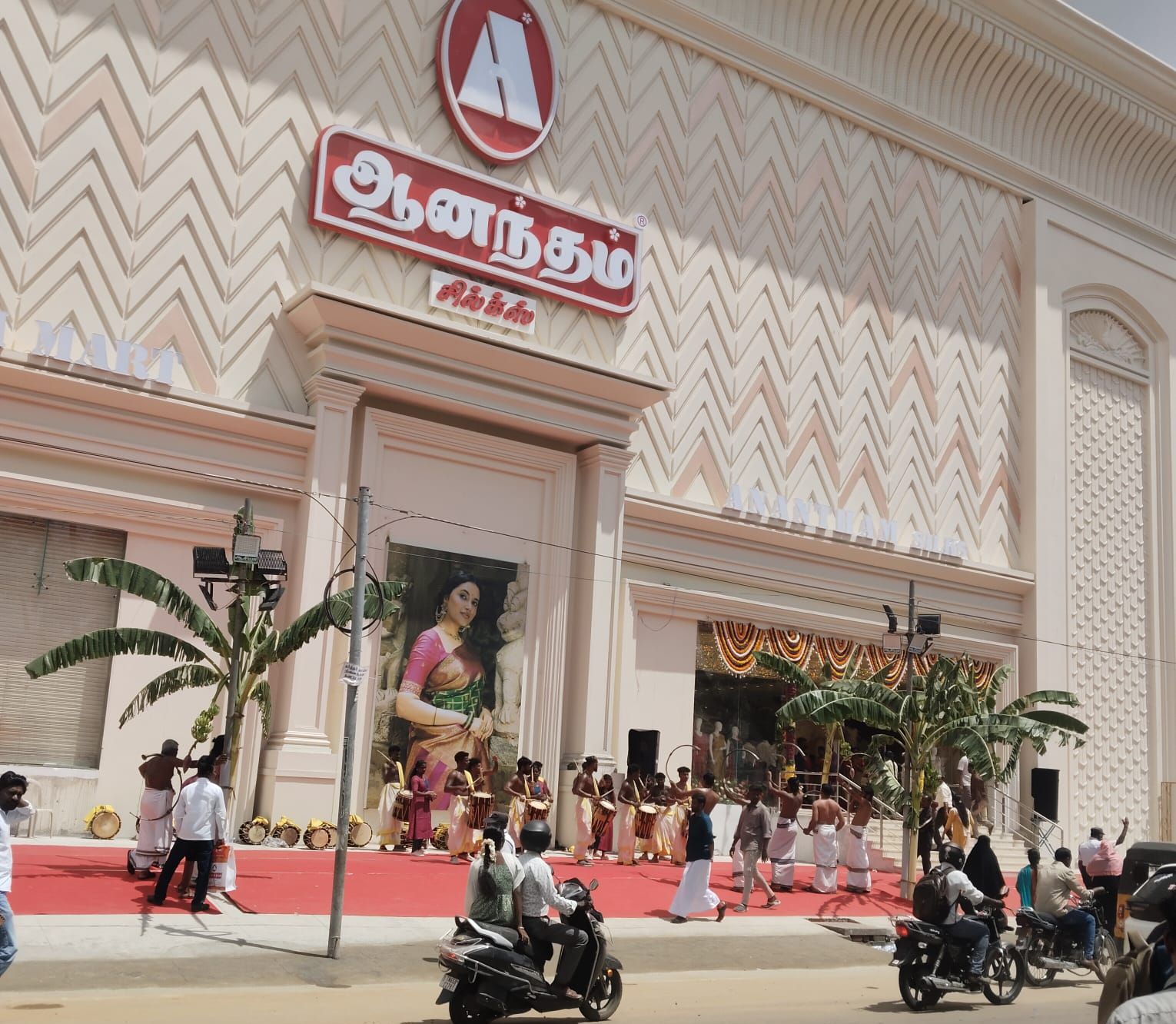
Textile showrooms are a speciality at Bhabu Electricals. Over the years we have delivered electrical works for more than thirty-five stores for groups including Seematti, Maharaja, Anantham, Lucky, Pachaiyappas, Vamsha and Sangeetha — from 20 kW brand outlets to 1000 kVA multi-floor flagships. Silk showrooms make unusual demands on an electrical system, and these are the lessons we bring to every new one.
1. Light is the product
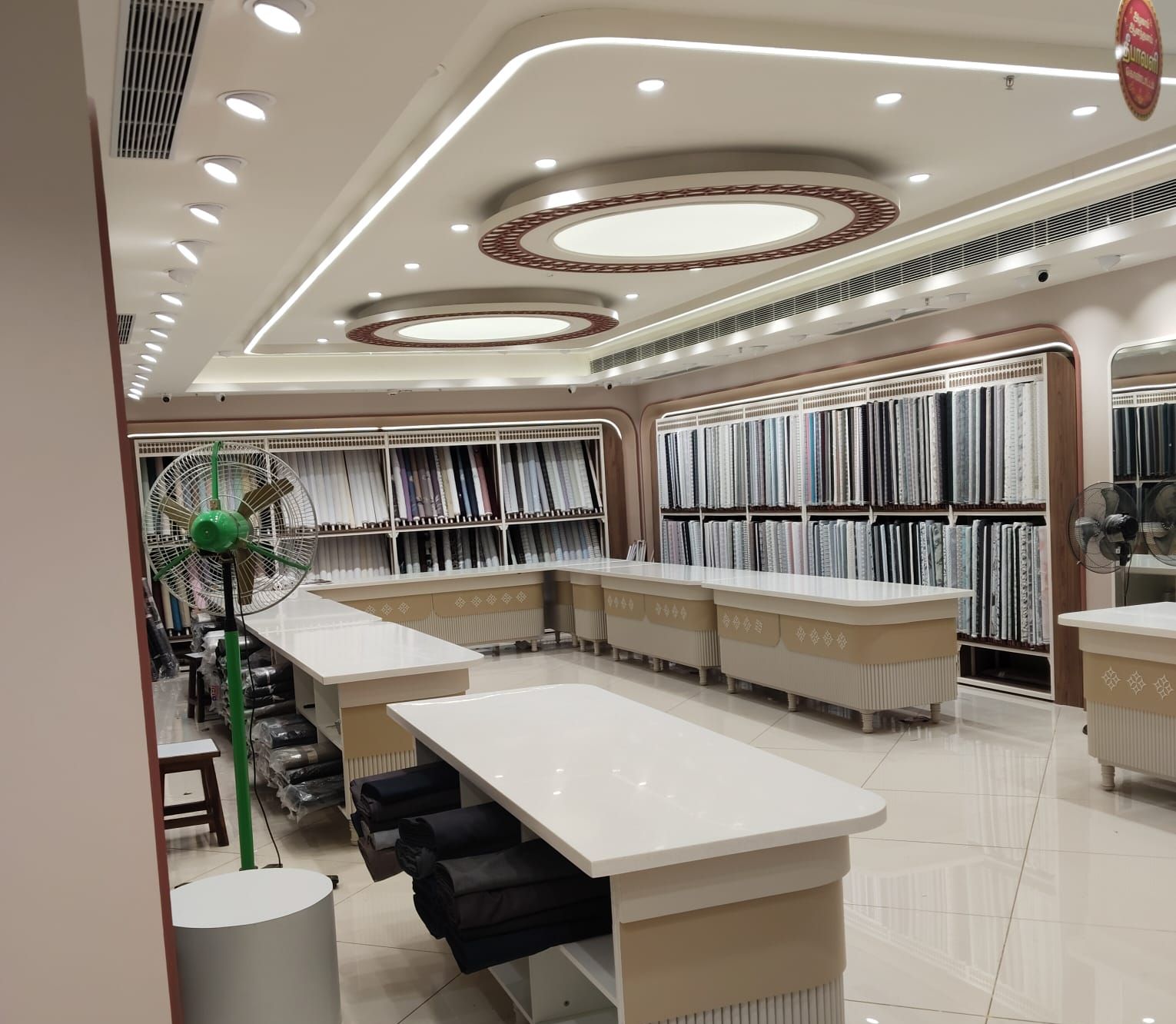
A customer choosing a wedding silk is judging colour, sheen and zari work. Lighting has to render colours faithfully, avoid glare on glossy fabric and stay consistent from counter to counter. That means planning circuits around the merchandising layout — not just the ceiling grid — and providing enough flexibility for the interior team to fine-tune.
2. Air-conditioning dominates the load
Large glass façades, crowded festival weekends and hot afternoons make HVAC the single biggest load in most showrooms. Getting the HVAC load right early often decides whether the building needs an HT service. More on LT vs HT.
3. Festival peaks are the real design case
Deepavali and wedding-season weekends bring several times the normal footfall. Lifts, escalators, lighting and cooling all run flat out. We design distribution and backup for these peaks — not for a quiet Tuesday.
4. Backup must be seamless
A blackout on a busy evening is a safety risk as well as a lost sale. We integrate DG sets with automatic changeover, and UPS for billing counters, CCTV and emergency lighting, so customers barely notice a grid failure.
5. Façades sell before the door opens
Signage and façade lighting are part of the brand. They need weatherproof wiring, separate timers and circuits that can be maintained without disturbing the sales floor.
6. Fast-track schedules need disciplined coordination
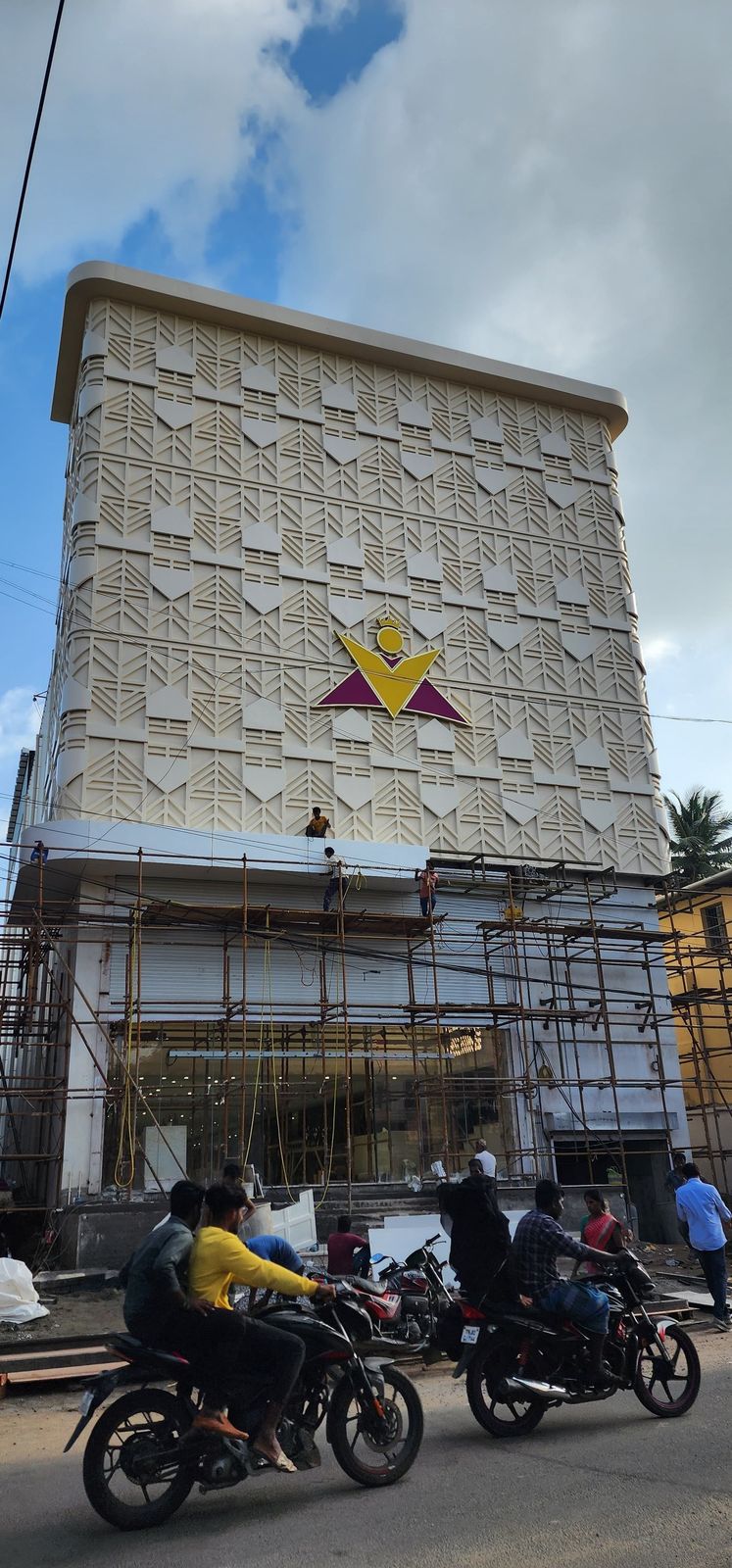
Showroom owners usually have a fixed opening date — often an auspicious one. Electrical work has to keep pace with civil, HVAC and interior teams working simultaneously. Our practice is to release work floor by floor, keep a senior engineer on site through the final weeks, and start statutory approvals early.
7. Think about the next refit
Showrooms are remodelled every few years. Spare ways in distribution boards, accessible cable trays and clearly documented circuits make the next refit faster and cheaper.
Opening a new store?
From a single brand outlet to a multi-floor flagship, we've done it before. See our textile projects →